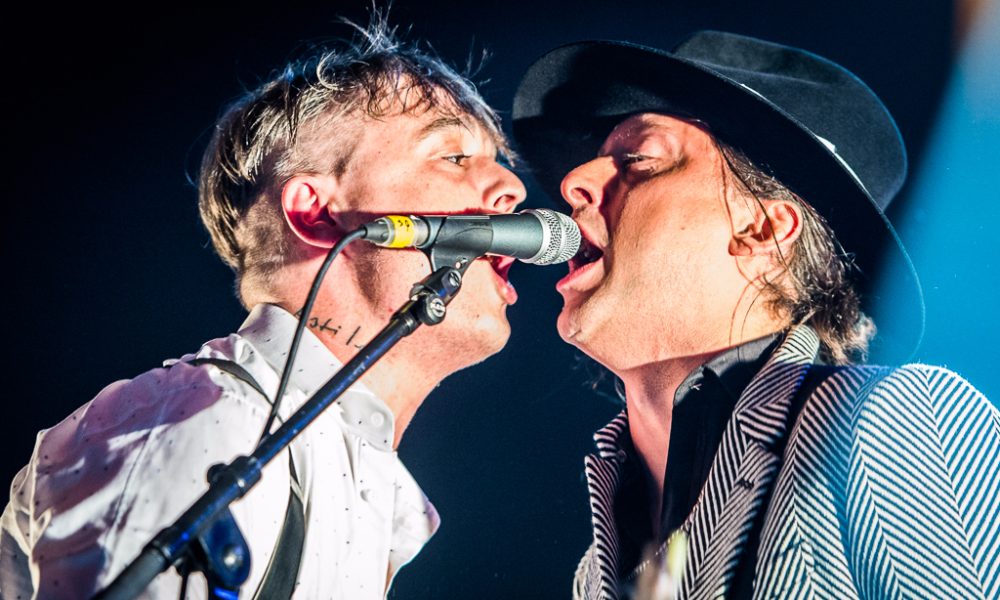
The Libertines: the last of the Romantic poets

Week one of quarantine has been spent exhausting the entire catalogue of The Libertines and I can’t help but draw parallels between Pete Doherty and the Romantic poets, a group of writers that Doherty has previously recognised as one of his core influences. The band emerged onto the British music scene at the turn of the century when I could barely sing along to songs let alone understand them. However, if I could have belted out ‘What a Waster’ at the age of three, I certainly would have, regardless of the on-the-nose expletives. Now, two years into an English Literature degree, the lyricism of The Libertines appears to me to be a 21st century call back to a time where Byron, Wordsworth, Coleridge and others might just have been the messy-haired headline-magnets that were (and sometimes still are) Carl Barât and Peter Doherty.

When William Wordsworth changed the face of contemporary poetry in 1798 with the publishing of ‘Lyrical Ballads’, he opened it with a preface that emphasised the importance of using the language of the common man, as “in that condition, the essential passions of the heart find a better soil in which they can attain their maturity, are less under restraint, and speak a plainer and more emphatic language”. This is a long running theme of The Libertines music, with their frequent accessing of colloquialisms and British slang resonating with those who use that language in their every day lives. For instance, the track ‘Iceman’ which appears on the 2015 effort ‘Anthems for Doomed Youth’ is packed full with references specifically for their British audience, with “Suedehead”, “how’s-your-father bookie’s runner scene”, and “rummest sort Stockwell had ever seen” being the blatant examples of this. Here, the lyrics seek to penetrate the imagination of the local Brit, drawing on their past experiences to create a vivid image in the mind of the listener and a subconscious national identity. Again, we can see this adherence to Wordsworth’s themes in ‘Time For Heroes’ when Doherty sings “He knows there’s fewer more distressing sights than that/ Of an Englishman in a baseball cap/ And we’ll die in the class we were born/ But that’s a class of our own my love”. With these lines, Doherty channels Wordsworth and his appreciation of the everyday and manages to perfectly encapsulate what it means to be British in 2002, with connotations of the political atmosphere being romantically infused with the embracement of who we are.

More broadly, the lyrics of the band directly reflect the attitude of writers of the Romantic period, although reacting to different problems that come with the times. As Clare once refuted serfdom and longed for the reinstatement of common land ownership, Doherty and co retain the core fundamentals of Britain, creating the ‘Albion’ lore that permeates throughout their music. Ever the victims of tabloid press and juvenile journalists,Doherty expresses his discontent with what has become of the media in the track ‘Tell the King’, taken from their debut, ‘Up the Bracket’. Although referencing Barât with the lyrics “You’re like a journalist/ No you can’t cut and paste and twist/ You’re awful”, the lines carry the connotation that Doherty is restless with the misquoting surrounding him; this being just one indication that the “Arcadian dream” mentioned on ‘The Good Old Days’ is well and truly slipping away for the band and wider society. Nevertheless, “the Albion sails on course”, with The Libertines still yearning for that paradise land that proves so elusive.

And like Samuel Taylor Coleridge did in ‘Lyrical Ballads’, Doherty is not afraid to take a turn away from reality, conjuring what is presumably fictional accounts of events (although, with Doherty, even the most unbelievable stories usually appear true). Coleridge managed to slip ‘The Rime of the Ancient Mariner’ into ‘Lyrical Ballads’ and largely subverted the grounded reality of the rest of Wordsworth’s included works. The poem isn’t particularly mystical but definitely feels unique in the context of the surrounding work, and the same might be said of ‘Up the Bracket’ – the title track of The Libertine’s debut album. Sonically, the track is vintage Libertines, yet within this track the listener is given a narrative where Doherty consistently refuses to give up his friend to two “shadow men”. There is no real resolution to the narrative aside from the presumption that the subject of the song will “end up like Joseph, bloody in a hole”, in reference to the bible character who is thrown into a well out of jealousy from his brothers. It’s a great song and one of the band’s best, and I might suggest that its subtle differences from the rest of the album in the regard of narrative content make it stand out that bit further, just as Coleridge did with his poem several hundred years ago.

With these paragraphs, I have barely scratched the surface of what makes The Libertines so unique and one of Britain’s best ever contributions to modern music, but their parallels with classic literature gives them an extra layer of nuance that many of their contemporaries lack. Doherty is a true poet and, most importantly, a voice for the people. If you keep up to date with his goings on, you’ll know that he is now in property with the rest of the band, with ‘The Albion Rooms’ in Margate being a hotel/ studio that doesn’t ask to be anything more than homely and enjoyable for its visitors. When he’s not walking his huskies on the beach of Margate or recording with the Puta Madre’s, Doherty is popping up outside music shops on Record Store day to perform guerrilla gigs to small crowds on the streets or polishing off full English breakfast eating challenges in random cafes. Carl Barât is more the classic rock and roll star both in looks and personality and is a phenomenally talented guitarist, yet the mysticism that surrounds his co-frontman is what really propels the band into the stratosphere. The young lad who subscribed to the Umberto Eco view that Noel Gallagher’s a poet and Liam’s a town crier descended on a rocky trip through fame, fortune and drugs and came out the other side (remarkably) as possibly the last ever Romantic poet, always staying true to his roots and being, unapologetically, Peter Doherty.

“And we’ll die in the class we were born, but that’s a class of our own, my love”
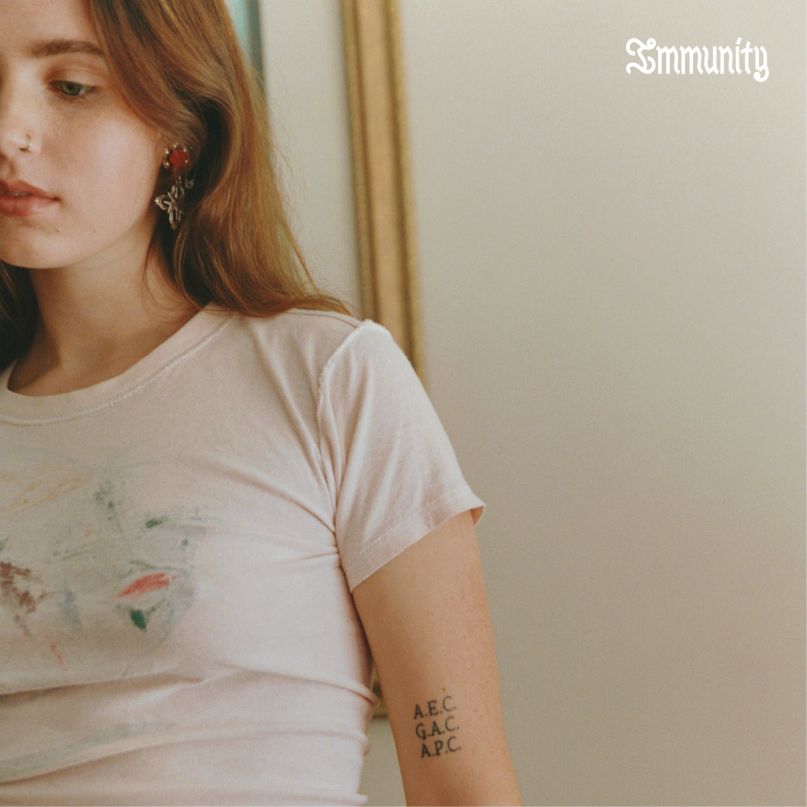
The Fragile Beauty in Clairo’s ‘Immunity’

Like many music listeners who learn the name ‘Clairo’, my entry point into her music was inevitably through the single ‘Pretty Girl’ which happened to pop up whilst I let music videos cycle through on Youtube. At first, the tens of millions of views seem to be at odds with the fairly low budget audio quality and video, but do not underestimate the catchiness of the hook, which will cause frequent ear worms for many weeks. It’s a good track; fun and light on the ear, yet the subject matter deals with how Clairo struggled to fulfil the oppressive expectations of a previous partner and how her love for them clouded her perspective of what was clearly an unhealthy relationship. I fell hook, line, and sinker for Clairo’s early tracks and the bedroom pop niche that she co-pioneered with other artists such as Gus Dapperton and Still Woozy. However, her debut album ‘Immunity’ dropped this association to her musical origins and moved toward a more mature sound, and my god did it pay off.

‘Immunity’ begins with the delicate piano strokes of track 1: ‘Alewife’, setting the tone perfectly for what is to follow for the listener. As the track progresses, further instrumentation kicks in and Clairo begins her recollection of when she nearly took her own life in the eighth grade, expressing her gratitude to her friend who stopped her from doing so. This is a bold move for a first track on a debut album, but it immediately denotes that Clairo is not afraid of embracing her emotions and, as the listener, it carries the assumption that this album will be exploring all the ins and outs of the artist’s psyche, allowing us unique insight into her life. The track is well handled and intensely intimate, but the building drums as the song continues have an air of growth and optimism that connote Clairo’s moving on from this dark place, expertly leading into the next track: ‘Impossible’.

The second track has a more upbeat tempo, yet slows down for the chorus as Clairo reflects on a past relationship and resists the temptation of returning to that relationship. Clairo herself has said that this song shows her “growing” and it is evident come the final seconds as ‘Impossible’ fades out with laughter and light tones. Track 3 titled ‘Closer To You’ is the moodiest of the first three songs, and the artist experiments with autotune for the first time in the record in conjunction with punchier phrases like “shut up” and “fucked up”. On twitter, Clairo has explained that the use of vocal effects in the track represents a wall she has to break through and the parts of the song which do not use the effects are a deliberate call to the subject of the track at this particular moment, as if she faces a constant battle to maintain extended communication with them. It is one of many points within the album that gives the listener an extended subconscious insight into Claire Cottrill as a person and not just Clairo who broke through with a webcam in her bedroom. Very few artists are willing to do what Claire is doing in ‘Immunity’ and the warm, melodic tunes that surround her poetry on the tracks serve as the perfect catalyst for the listener’s thoughts to become harmonious with hers.

Now that the listener has arrived at the middle section of the 40 minute run time that makes up ‘Immunity’, a flurry of tracks arrives that, personally, I deem to be some of the best moments of 2019’s musical catalogue. ‘North’ is track 4 and carries real hit-power, with its blissful choruses and Clairo’s dreamily soft singing articulating her conflict with fleeting romances and the obligatory raising of her guard that comes with tour-life intimacy. It marks a moment in the album where Clairo has continued to grow from the past experiences she has previously informed the listener of and how those experiences have impacted her mental state and her handling of new situations that arise. In this sense, ‘Immunity’ has a somewhat bildungsroman feel to it, with the artist feeding off of her past to become the person she is today.

I wanted to dedicate a whole paragraph to the following track as it is by far my favourite Clairo song and the one that says to me that Claire Cottrill is destined for greatness. ‘Bags’ is the soul crushingly heart-warming emotional joyride that inevitably ends in the oh-so familiar failure to break through to someone you love. In the track, Clairo, in a frustrated manner, emphasises the importance that every single second has when she spends time with the subject of this song, and how she will engage in meaningless activity like watching TV just to be close to this person who has not revealed any hints regarding their feelings for her. There’s an eager tension that permeates throughout this song, and as the chorus reveals with the line “I guess this could be worse/ walking out the door with yours bags”, Clairo has herself envisaging worst case scenarios in a nearly-hopeless attempt to appease her emotions. The instrumentation appears to be echoing this action too, with the song embracing what Genius describes as “soft guitar, wavy synths, and twinkling piano”, and the chord progression around the 2 minute, 20 second mark carries a determined pace that can be seen as an attempt to escalate the emotion of Clairo’s scenario, yet ultimately fails as we return to the enchanted meandering of the piano which runs parallel with the awkward comfort of self-assurance, even when emotions are not reciprocated. It is around here that Clairo sings the line “But what’s the rush? Kissing, then my cheeks are so flushed” which I think is a beautifully fragile way of exploring the tender familiarity of another’s company. ‘Bags’ is a delightful listen and establishes Clairo as an extremely talented, yet underrated, songwriter who, despite her success and global recognition, is only getting started.

From there, Clairo takes us into the tracks ‘Softly’ and ‘Sofia’, with the pair carrying a sense of optimism and defiance that is particularly poignant, especially with Clairo’s coming out as bisexual in March 2018. The two tracks directly address her bisexuality, with ‘Softly’ alluding to a ‘go with the flow’ mentality in regards to attraction, and the outro of the track has the declaration “I don’t care what they say/ Care what they say to me, I’m doing it differently”. Bridging into ‘Sofia’, Clairo continues in this fashion, referring to a character called ‘Sofia’ with whom she feels a strong bond with, strong enough to defy the social convention of the society in which she exists. The two tracks are empowering and accepting and, considering where we started all the way back at ‘Alewife’, it is evident that Clairo has taken us by the hand and walked us through her life, instilling a sense of pride within the listener that only an album of this capacity is capable of doing.

‘Immunity’ concludes with four tracks, three of which I will discuss together as, sonically, these are not dissimilar. ‘White Flag’, ‘Feel Something’, and ‘Sinking’ explore the healing process after failed relationships, the absence of emotion, and the rheumatoid arthritis that the singer has struggled with since age 17. In these songs, we learn that Clairo has no time for hostility with past lovers, instead choosing to appreciate the good that they brought to her life and not wanting to unnecessarily end friendships, even when the romance has gone. Additionally, we get the other end of the spectrum in the appropriately named ‘Feel Something’, where romantic connections are extinguished and replaced immediately with the moving on process that Clairo has experienced in her life. Somewhat unrelated from its subject matter, this song contains a certain guitar twang that has a Pink Floyd ‘Wish You Were Here’ vibe to it which enhances the sense of nostalgia that has been an ongoing theme of this album. ‘Sinking’ quietly refers to Clairo’s health issues and how they can be numbed when in a state of infatuation however, heart-wrenchingly, the artist holds an interior battle as to whether she is to blame for the pain she is in and the self-loathing that is within all of us at times just manages to reveal its shadowy figure beneath the surface, but Clairo does not let it win, instead drifting out of the song with melodic humming.

‘I Wouldn’t Ask You’ rounds of the track listing and is a 7-minute epic consisting of two parts, with the help of young singers for backing vocals at times, creating an atmosphere of delicate innocence. Again, the song refers to a time in her life when rheumatoid arthritis left her hospitalised and how her then boyfriend was left to care for her. The track is split between two different musical tones, with the first half being slow, hymnal, and intimate, and the second half characterised by a glittering instrumentation accompanied by Clairo’s emotionally fuelled vocals on top of the returning child backing singers. The presence of the children connotes the rawness of emotion at that age and how things are simplified, yet that does not mean that they are any less strong than the emotions we have as adults. This is an idea that has its roots in William Blake’s ‘Songs of Innocence and of Experience’ published in the 18th century, which details many of the same notions. Overall, it is an ideal closer to an album that specifically deals in the fragility of the self and the incoherency of the head and the heart. At just 21 years old, Clairo demonstrates a sophisticated approach to understanding herself and we as listeners can vicariously achieve this self-acceptance through her music. The music is flawed at times, as pointed out by Anthony Fantano’s review for theneedledrop, but I think this adds to the beauty of the record. It is about acknowledging these flaws and learning that perfection does not exist, and, ultimately, growing from our experiences.

The Pros and Cons of Subscribing to theneedledrop

I’ve been subscribed to theneedledrop, real name Anthony Fantano, for several years now and my relationship with his content is unlike any other Youtuber on the platform. First and foremost, I am a fan of the man himself. Fantano’s ability to combine humour and serious musical criticism at the flick of the switch is unparalleled in his field and the abundance of nuance in his videos make him a unique presence on the internet. On twitter, his engagement with memes and his 650,000 followers has earned him a loyal fan base, of which I would consider myself a part of . This is why I feel so conflicted about his impact on my musical taste. Sometimes I have found myself waiting for Fantano to review an album before I have even given it a listen just to work out whether or not I should like it. If it scores below a 6, I am immediately coming in to the album with a negative preconception of it, and if it scores above that, then no matter what it is, I feel obliged to appreciate it as a considerable work of art. But what happens when I don’t agree or the 7/10 should honestly be a 4/10? This is where I have struggled at times.

Fantano’s most notorious review has to be Kanye West’s ‘My Beautiful Dark Twisted Fantasy’ which scored a 6/10 upon its release in 2010. This year, Fantano did a redux review which, somewhat spectacularly, awarded the album the exact same rating as it did 10 years earlier. This review is one that has baffled fans of the channel for years and has become somewhat of a colloquial meme amongst commenters, and rightfully so. MBDTF is not a 6/10. In my opinion, and to use Fantano’s own classification system, it belongs somewhere between ‘strong 8’ and ‘decent 9’. It is a seminal album which continues to leave its fingerprints all over hip hop music 10 years later. This album was delivered to listeners in a somewhat apologetic fashion after Kanye’s infamous storming of the stage during Taylor Swift’s VMA acceptance speech in 2009, and my word were his actions quickly forgiven. MBDTF is an omnipotent humbling of Kanye’s contemporaries and solidified his legendary status, with the track ‘POWER’ being arguably one of the best songs ever written. Yet the record got a 6. I think Fantano knows that its a great album, and the redux review suggests to me that he enjoys the meme and that the score is partly delivered with a hint of trolling intended at devout Kanye worshippers. But maybe I’m wrong and he genuinely is indifferent about the album.

My main issue with theneedledrop is its affect on my subconscious relationship with music. Since being a regular viewer, I find myself critiquing an album just as Fantano would and my music taste has become ominously aligned with what receives a positive review on the channel. Don’t get me wrong, I’m thankful for the recommendations I’ve received over the years and I’ve become a big fan of artists such as Brockhampton, Fleet Foxes, and Charli XCX because of it. I don’t really have any quarrels with music that receives positive reviews, its the music that doesn’t that worries me somewhat. When I have listened to an album and relatively enjoyed it, I’ve immediately sidelined that album when Fantano appears in the thumbnail of its review in the menacing red flannel. The latest example of that has to be Doja Cat’s ‘Hot Pink’ release. I wasn’t blown away by it when I heard it, but there is something about Doja Cat’s energy that makes her a fascinating artist to watch. There are obvious pitfalls in the record and the tracks ‘Cyber Sex’ and ‘Rules’ are what I’m not so subtly alluding to, but there are enough good tracks to balance out the record. ‘Say So’ is an undeniable hit and embodies what I find so intriguing about Doja Cat, and ‘Like That’ and ‘Juicy’ are a pair of tracks that I have listened to more than a few times and still enjoy. So why have I just ignored the rest of the album since the review? I think the criticism I hear in the reviews sticks with me when I then return to the music and all I subsequently hear is exactly what Fantano was talking about the whole time. I find it hard to overlook the bad parts and just appreciate the music for what it is.

And there’s also the problem I face when something receives a very high score and I want to like it, but can’t. Ive had this issue several times, ranging from Earl Sweatshirt’s ‘Some Rap Songs’ to Aerial Pink’s ‘pom pom’. Now, this is not to say that I think these specific albums are bad, simply I just could not engage with them in the way I wish I could have done. While this seems like I do have my own personal taste and that this point may be contradictory to much of what I have argued already, I have to admit that I feel some frustration that I cannot find the same enjoyment in these records that Fantano has. Furthermore, this then makes me wonder why I fell in love with Clairo’s music despite its mediocre rating. Am I a sucker for easy-on-the-ear music, or am I just unable to access that level of perception that would give Playboi Carti’s ‘Die Lit’ a 7/10 when I only hear 3/10?

Fantano himself is aware of his influence over his audience, publishing a video titled ‘I CONTROL WHAT YOU LIKE!’ in which he acknowledges how his popularity and sophisticated musical criticism has a profound affect on his audience’s taste. However, he is always promoting musical debate, with his ‘Lets Argue’ series encouraging listeners to engage with him in regards to some of their own perspectives on artists, albums, or anything in the wider musical sphere. He also gives his more musical viewers a platform at times when he reviews their own songs on his second channel, ‘fantano’, which has accumulated 960,000 subscribers at the time of publishing. Anthony Fantano is a very likeable character and I think this also has something to do with how he has a direct influence on my music taste. If he were hostile or mean in his videos, that would subconsciously evoke disassociation from him, but because he is humorous and a seemingly good guy, I find myself nodding along in agreement with near everything he says in his reviews.

Ultimately, I think my problems regarding my subscription to theneedledrop come from my shared passion for music with Fantano and the fulfilment of musical potential in artists. Taste is everything in music and, as I have covered with my appreciation of artists and albums that have not received rave reviews from Fantano, it is okay to like whatever you want. I think Fantano intends for his reviews to be more guidelines for good music rather than an attempt to dissuade his audience from certain music and pull them toward others. It is important to remember that each review is an opinion, however it is admittedly hard to disagree with an opinion when it comes from a place that you respect such as Anthony Fantano. Theneedledrop will always be the best place for me to find new music and is indisputably my favourite channel on Youtube, worthy of a subscribe if you have not done so already, just be sure to continue to like what you like, regardless of whether its a ‘strong 10’ or a ‘light zero’, so long as it’s not Corey Feldman’s ‘Angelic 2 the Core’ or Nostalgia Critic’s ‘The Wall’.

Design a site like this with WordPress.com
Get started